
CNC Milling: The Buyer's Decision Sequence from CAD to CMM
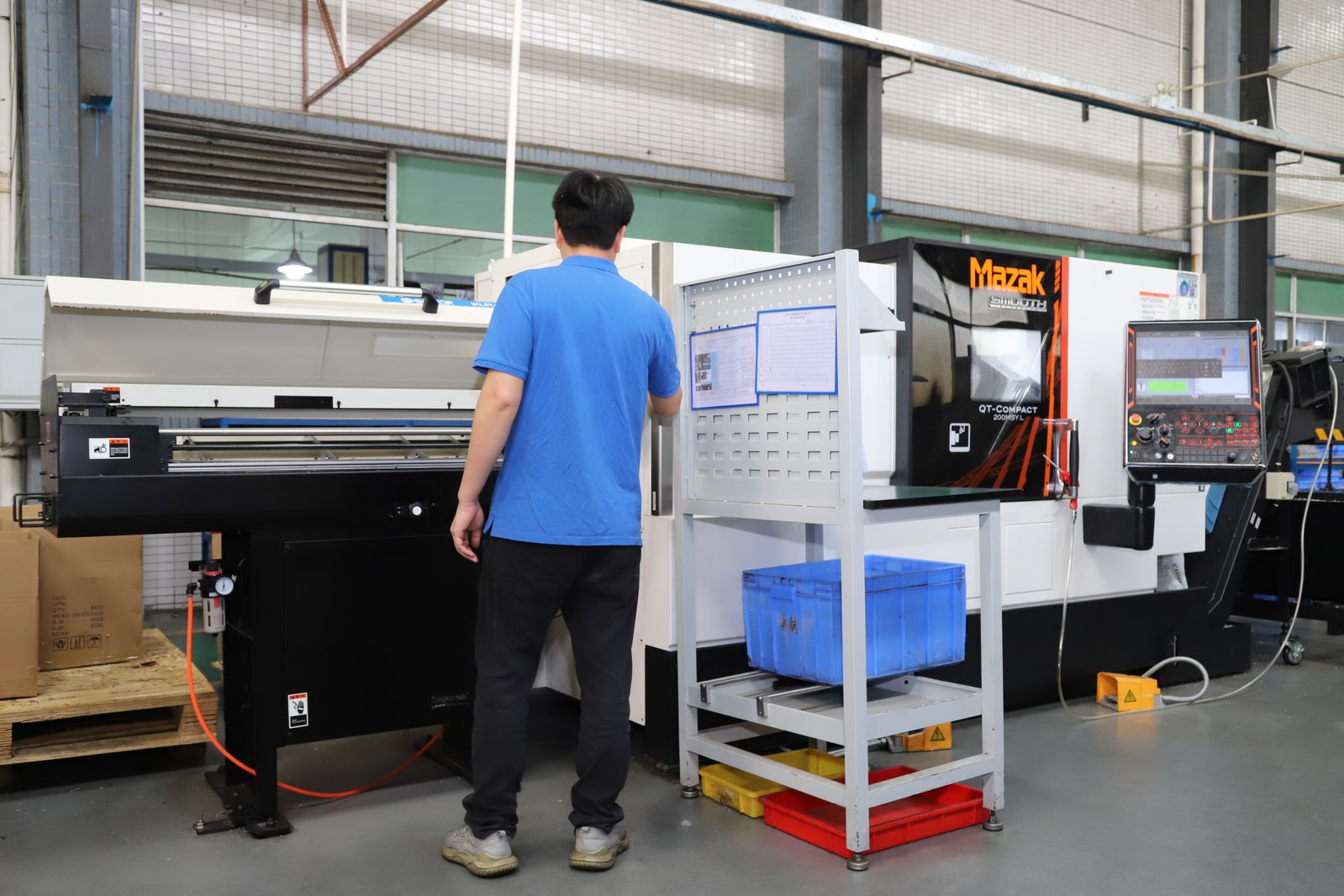
CNC milling is the most widely quoted machining process on the internet, which makes it the hardest to buy well: every shop claims it, few buyers know the sequence of decisions that turns a CAD file into a measured, verified part at a fair price. This guide walks that sequence in order — what to fix in the model, what to specify on the drawing, which materials and axis counts fit the geometry, what to read in the quote, and what to check at first article and in production. It is written for the person who will sign the PO, not the person who will run the machine: if you follow the order of decisions here, the shop's job gets easier, your quote gets more honest, and the parts arrive the way the drawing promised.
What should you fix in the CAD model before it reaches a milling shop?
The model is the contract. Milling programs are built from the model file, so whatever is missing, implied, or internally inconsistent there gets interpreted, and interpretation is where cost and errors begin. Before you send anything, close the obvious gaps:
- Model what you actually want machined. Fillets, drafted walls, internal pockets, and thread callouts must exist in the model or be explicit on the drawing. A model that shows a sharp internal corner that a milling cutter cannot produce will be interpreted, and the interpretation may not be yours.
- Confirm the internal corners match real tool radii. Every internal corner has a radius equal to the tool that cut it. If the drawing demands a sharp corner, either the design must change or the corner must be specified as a small radius; a shop that silently substitutes its smallest tool is making an engineering decision on your behalf.
- Define the datum scheme before quoting. Machining and inspection both locate from datums, so the datums should be features the part can be held and measured from in one setup. Datums scattered across faces multiply setups and stack-up error, and the quote will carry both.
- State the material by full designation. 6061-T6, 7075-T6, 304 stainless, 17-4 PH H900 — never "aluminum" or "steel." The alloy decides strength and corrosion behavior; the temper decides whether those properties exist. A model without a material is a quote without a price anchor.
These fixes cost minutes in CAD and save days in quoting and rework. A clean model is the cheapest discount a buyer can negotiate — most shops quietly price their risk into the quote, and a model that removes the risk removes the markup that paid for it.
How do you pick the axis count the geometry actually needs?
The axis count is the first machining decision, because it controls what geometry is possible and how many setups the part needs. The buyer's version of the question is not "how many axes does the shop have" but "how many does my part need":
- 3-axis milling handles the majority of prismatic work — faces, pockets, holes, and features machined from one direction. If the part has one main face and modest depth, 3-axis is the economical default, and a floor with 50+ 3-axis machines will run it fast and cheap.
- 4-axis adds rotation around one axis — useful for parts with features on multiple sides or around a cylinder, machined in fewer setups than flipping by hand.
- 5-axis (3+2 or simultaneous) earns its higher hourly rate in two situations: five-sided prismatic parts whose face-to-face relationships matter (machined in one setup instead of several), and contoured surfaces that cannot be cut any other way. If the part is a simple two-sided bracket, 5-axis is capability you would be paying for without using.
The quote should name the axis count and the number of setups it assumes. A shop that routes your simple part to a 3-axis machine and reserves 5-axis for geometry that needs it is managing your cost; one that routes everything to its most expensive machine is building its utilization at your expense.
When geometry outgrows three-axis work, the trade-offs are worked through in the 4-axis and 5-axis guides.
How does material choice move milling cost, not just properties?
Material decides machinability, and machinability decides machine time, tool wear, and price — often more than the geometry does. The practical map for milling buyers:
- Aluminum (6061-T6, 7075-T6) — the economical default. It cuts fast, holds tight tolerances, and is cheap at the mill, which makes it the right frame for housings, brackets, and prototypes where weight and cost matter.
- Stainless (304, 316, 17-4 PH) — slower to cut and harder on tools because it work-hardens and holds heat; expect longer cycle times and higher per-part cost for the corrosion resistance and strength it buys.
- Titanium (Grade 5, Grade 23) — the slowest and most expensive common milling material: low thermal conductivity concentrates heat at the tool, forcing low speeds and aggressive coolant. It earns the premium where strength-to-weight at temperature matters.
- Engineering plastics (PEEK, Delrin) — mill cleanly with sharp tooling but demand care to avoid melting or smearing; they are specified where weight, insulation, or chemical resistance rules out metal.
The buying rule: if the drawing can use a faster material, it should. The material bill and the machine time both scale with the metal, and neither can be negotiated away once the material is frozen, so the material conversation belongs before the drawing, not after the first quote shocks you.
For the alloy-level detail behind that map — which grades machine fastest, which anodize clean, and why T651 plate stays straight — the aluminum CNC milling guide covers it end to end.
What should the drawing specify so the quote is honest?
A milling quote is only as precise as the drawing behind it, and four specifications do most of the work:
- Tolerances on the features that function. Bores, mating faces, and locating features get tight callouts; cosmetic surfaces sit on the general block. Precision is priced per feature — a drawing tight everywhere pays everywhere, and a drawing that cannot explain its own tight callouts gets priced for the shop's risk, not your need.
- Surface finish with method and cutoff. Ra on a sealing face means nothing without the measurement method and cutoff behind it. Name the functional surfaces, say which are cosmetic, and let the quote reflect the real finish work.
- Material and temper in full. As above — the designation is the price anchor and the quality anchor.
- Quantity and program stage. One prototype amortizes setup and programming across a single part; a thousand spread them thin. A shop that quotes both on the same page is giving you the real cost picture and the real lever to pull at volume.
Add the finish steps (anodize, bead blast, passivation) on the drawing rather than discovering them at delivery — finishing changes dimensions on aluminum and restores corrosion resistance on stainless, and both belong in the machining plan, not after it.
How do you read a milling quote for what it actually says?
Two quotes for the same milling drawing can differ by 30% for honest reasons, and by more for dishonest ones. Four questions reconcile any pair of quotations:
- Same process assumptions? One quote may assume 3-axis with two setups; another plans 5-axis in one. Both can be "right" for the same drawing and price differently — confirm the axis count and setup count before comparing totals.
- Same material and finish scope? Confirm the alloy line matches your drawing, and that the finish (anodize, passivation, bead blast) is included rather than a discovery at delivery.
- Same inspection scope? A quote that inspects every tight feature on a CMM costs more than one that treats most features as general tolerance. Decide which features matter, then compare like for like.
- Same documentation? Material certificates, dimensional reports, and first-article documentation are labor. A quote listing them as line items is being transparent; one that is silent is either absorbing the cost or not planning to do the work.
The frame that keeps the comparison honest: you are not buying the lowest machining price, you are buying a part that meets its drawing, with the material and surface it specifies, delivered without surprises. Compare the quotes that deliver that, and let the ones that do not explain themselves.
How do you verify quality at first article and through the run?
The first article is where the drawing's intent meets the shop's interpretation, and it is the cheapest place to find every misunderstanding. A proper first-article process measures the tight features on a CMM with values against the drawing, verifies the finish with the specified method, and matches the material certificate to the lot. Review the report before production begins: a measured value drifting toward the edge of a band tells you the feature is marginal before you own a hundred of them, and a callout the shop read differently tells you the drawing needs fixing.
Through the run, the question shifts from "can they make one" to "do they control the process." Ask how the shop monitors production: statistical process control on key characteristics is the difference between controlling a process and sorting its output. A shop that reports Cpk 1.851 on key features at ≥1.67 is describing a process; one that reports tolerances without capability numbers is describing a hope. And because quality is only as good as the material, confirm the incoming stock is verified — a portable XRF check against the mill certificate at intake is the control that stops a substituted alloy before it becomes your part.
Read the tolerance band before you read the index. Cpk is a ratio of the tolerance band to the process spread, not an absolute measure of accuracy. The figure above was recorded on a length characteristic with a 0.4 mm band (76.1–76.5 mm) — wide by design. Hold the same process spread against a ±0.005 mm feature and it fails outright. Ask for the band, the subgroup count and the sampling window on every capability number a supplier quotes.
Which failures recur on milling orders, and how do you prevent them?
The failures that repeat across milling orders are predictable, and each one is preventable at the specification or sourcing stage:
- Internal corners demanded sharper than a tool can cut. Every corner carries a tool radius; a drawing that ignores this ends in a phone call about interpretation. Design for real tool radii or specify them explicitly.
- Thin walls that deflect under the cutter. A wall that is rigid in steel flexes in aluminum, and a thin floor or wall that vibrates under the tool gets a poor finish and drift. Ask how the shop handles thin sections before you send the drawing.
- Material substituted because the drawing was vague. "Aluminum" instead of 6061-T6 invites the shop to choose, and the choice may not match the load your design assumed. Name the alloy; verify the lot at intake.
- Finishing discovered at delivery instead of specified on the drawing. Anodize changes dimensions; passivation restores corrosion resistance. Call out the finish before machining so it is part of the plan and the price.
- Tolerances demanded everywhere and proven nowhere. A drawing tight on every feature pays for precision it does not use, and a report that stamps rather than measures proves nothing. Tighten what functions, measure what is tight.
None of these failures is exotic. They are ordinary events that become expensive only when the drawing and the supplier screen do not catch them, which is why the sequence in this guide is worth following in order: model, drawing, material, quote, first article, run.
How do you choose the milling supplier itself?
The supplier screen is the last decision in the sequence and the one that protects all the others. Six questions, answered by email before you send geometry:
- What machines, and how many? The answer should name models and counts — a floor with 50+ 3-axis, 20+ 4-axis, and 20+ 5-axis milling machines alongside mill-turn and Swiss-type turning is a floor that routes by geometry. A list of categories is a recycled brochure.
- Which processes run in-house? Milling, turning, and grinding under one roof mean each feature goes to the process that matches it, and the critical steps are not subcontracted to someone else's quality system.
- How is quality measured and documented? In-house CMM inspection, named instruments, and a dimensional report with measured values — not a pass stamp — are the marks of a shop that treats metrology as evidence.
- What do the certificates actually cover? ISO 9001:2015, IATF 16949:2016, and ISO 14001:2015 with verifiable numbers. Ask for the certificate number and check it with the registrar; a wall frame is cheap, a verifiable number is not.
- How is incoming material verified? The answer should name an XRF check against the mill certificate — the control that makes the material in the drawing the material in the part.
- What ships with the order? Material certificates, dimensional reports, and first-article documentation should travel with the parts automatically, tied to the same lot and revision.
A supplier that answers with machine models, instrument names, and certificate numbers is running the system your part depends on. One that answers with assurances is asking you to accept its risk on your behalf, and on a process as quotable as CNC milling, that is the one cost you should never pay.
Frequently Asked Questions
What is CNC milling, and what can it make?
CNC milling removes material with rotating cutters under computer control to produce prismatic parts — housings, brackets, enclosures, and components with flat faces, pockets, holes, and contoured features — from metals and engineering plastics, from one-off prototypes to production runs.
What tolerances can CNC milling hold?
Our facility holds ±0.003 mm on critical milled features as standard production tolerance, with DIN/ISO 2768-f or better as the general default and precision grinding to ±0.002 mm where bearing and seal surfaces demand it.
Which materials can be CNC milled?
Aluminum alloys including 6061-T6 and 7075-T6, stainless steels including 304, 316, and 17-4 PH, titanium Grade 5 and Grade 23, and engineering plastics like PEEK and Delrin. Incoming stock is XRF-verified against its mill certificate before production.
Do you offer 3-axis, 4-axis, and 5-axis milling?
Yes — a floor of 100+ machines including 50+ 3-axis, 20+ 4-axis, and 20+ 5-axis milling machines, plus mill-turn centers, Swiss-type lathes, and grinders, so each job is routed to the axis count its geometry actually needs.
Can you mill a single prototype before production?
Yes — MOQ is one piece, and prototypes run on the same machines and tolerances as production, with first-article documentation showing measured values against the drawing.
How do I get a quote for milled parts?
Send the model, the drawing with GD&T and material designation, the finish callouts, and the quantity to [email protected]. The quote comes back with the process, the setup count, and the dimensional report scope stated, not just a number.
Which certifications does the shop hold?
ISO 9001:2015, IATF 16949:2016, and ISO 14001:2015 — with the IATF scope excluding product design under Clause 8.3, as a build-to-print manufacturer.
Unsure which axis count or alloy your next milling job should specify?
Send the part model and the drawing with tolerances and finish callouts marked to [email protected] or call +86 13126536955. You will get back the recommended axis routing, the setup count, and the inspection scope stated with the quote, not just a number.