
4-Axis CNC Milling: The Rotary Workhorse Between 3-Axis and 5-Axis
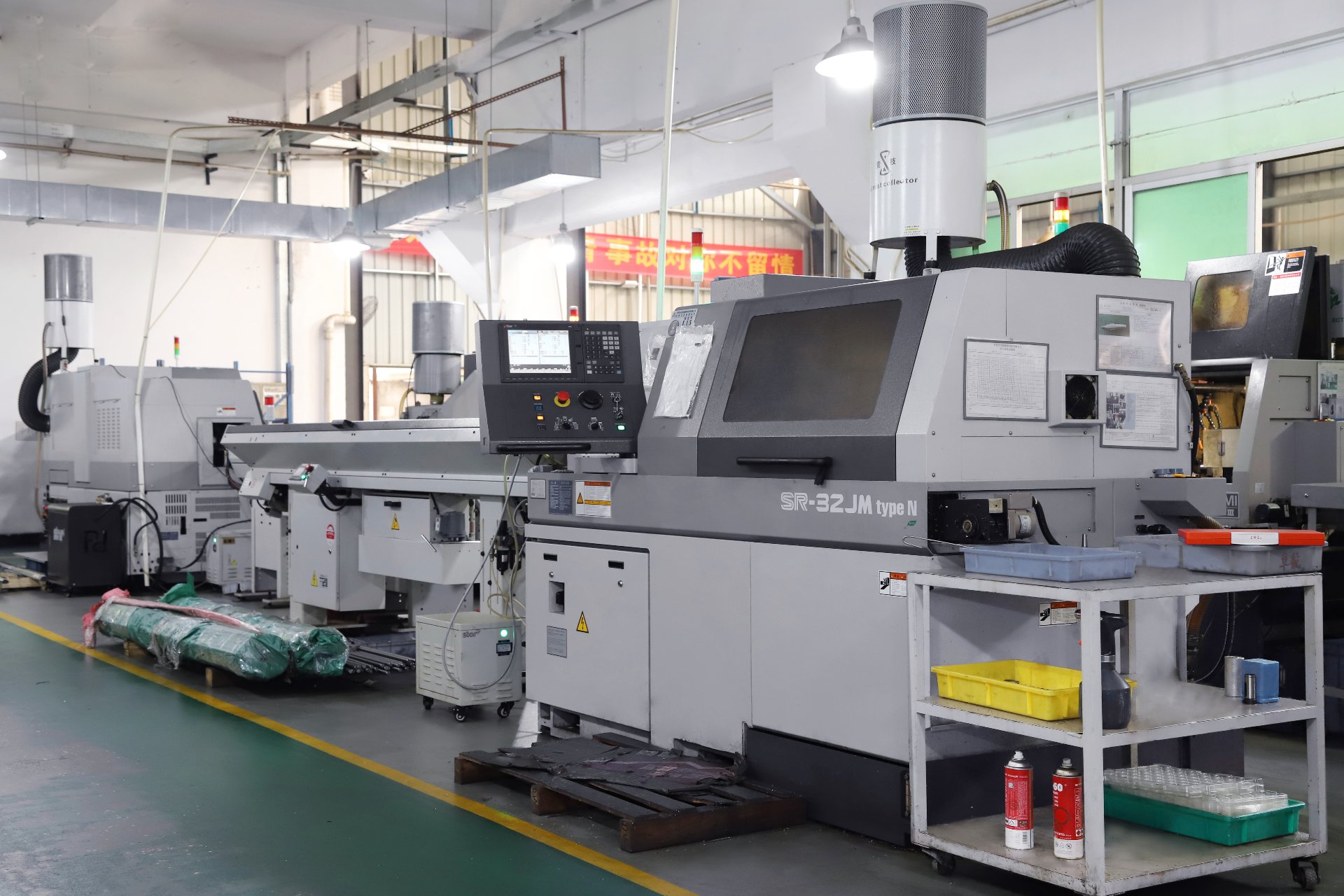
4-axis CNC milling is the most underrated machine in the milling shop: it sits between the 3-axis default and the 5-axis flagship, and buyers usually discover it only after a 3-axis quote comes back with too many setups or a 5-axis quote comes back with too many digits. A fourth axis adds rotation around one axis — usually the workpiece rotating against a horizontal spindle — which lets the machine reach features on multiple sides of a part in a single clamping, and machine features around a cylinder without re-fixturing. For the right geometry, 4-axis is the cheapest way to remove setups, and understanding exactly which geometry that is will save more money than any other axis decision you make.
What does the fourth axis actually add, and what can it not do?
The fourth axis is rotation around one axis, and that single rotation changes what is reachable in one clamping. The practical capabilities:
- Features on multiple sides of a prismatic part. A housing with machined features on four sides can be indexed around the rotary axis — each face machined in the same clamping, with the relationship between faces held directly instead of rebuilt through fixtures.
- Features around a cylinder. Holes, flats, slots, and grooves around a round part — a valve body, a coupling, a rotary component — are positioned by rotation rather than by manual indexing between setups.
- Continuous rotary work. With the right programming, the fourth axis rotates while the tool cuts — spiral grooves, cam profiles, and helically interpolated features that a 3-axis machine cannot produce.
The boundary matters as much as the capability. A fourth axis rotates around one axis only; it cannot tilt the tool to reach angled faces that point away from the spindle, and it cannot produce the contoured surfaces that need two rotary axes moving together. Those geometries belong to 5-axis. The honest summary: 4-axis removes setups and machines around one axis of rotation; 5-axis adds the second rotary axis that reaches arbitrary angles and contours.
When does 4-axis milling beat both 3-axis and 5-axis on cost?
Axis count is an economic decision, not a capability ladder, and 4-axis wins a specific band of geometry. The comparison works like this:
- Versus 3-axis. A part with features on four or five sides needs several 3-axis setups — each with its own fixture, its own alignment, and its own tolerance stack. On a 4-axis machine with a rotary table, the same part indexes through its faces in one clamping: fewer fixtures, less handling, tighter face-to-face relationships, and usually a lower total price despite the higher hourly rate. This is the 4-axis value case, and it is the same economics that make 5-axis indexed work attractive — minus the 5-axis price.
- Versus 5-axis. A 5-axis machine bills a higher hourly rate than a 4-axis machine. If the part's faces are all reachable by rotation around one axis — no angled holes pointing away from the spindle, no contoured surfaces — the fourth axis does everything the fifth would, at a lower rate. Routing such a part to a 5-axis machine is paying for a rotary axis the geometry never moves.
The decision rule a disciplined floor uses: the lowest axis count that reaches every feature in an acceptable number of setups. For a four-sided housing or a round part with radial features, that count is often four, and a shop with a real 4-axis fleet (20+ machines on this floor, alongside 50+ 3-axis and 20+ 5-axis) routes the job there because it is the cheapest machine that holds the geometry.
What tolerances and finishes can 4-axis milling hold?
Milled features on 4-axis work are held to the same standard as the rest of the floor — ±0.003 mm on critical callouts as standard production tolerance, with DIN/ISO 2768-f or better as the general default and precision grinding to ±0.002 mm where bearing and seal surfaces demand it. On key characteristics the process is tracked to a demonstrated Cpk of 1.851 with key features at ≥1.67.
Read the tolerance band before you read the index. Cpk is a ratio of the tolerance band to the process spread, not an absolute measure of accuracy. The figure above was recorded on a length characteristic with a 0.4 mm band (76.1–76.5 mm) — wide by design. Hold the same process spread against a ±0.005 mm feature and it fails outright. Ask for the band, the subgroup count and the sampling window on every capability number a supplier quotes.
The tolerance advantage of 4-axis is specific and worth stating: features machined in one clamping around the rotary axis hold their angular relationship to each other directly. A hole pattern around a cylinder, indexed on one machine in one setup, has its angular spacing produced by the machine's rotary positioning rather than accumulated across fixtures. The report should show those true positions — angular as well as linear — measured on a CMM against the drawing.
Surface finish on 4-axis work is ordinary milling finish — the rotary axis does not change the finish conversation the way simultaneous 5-axis does, because each face is still machined by conventional milling passes. Functional surfaces should carry Ra with method and cutoff, and cosmetic surfaces should be marked as such, exactly as on any milling job.
Which materials and parts suit 4-axis milling?
4-axis milling runs the same material range as any serious milling floor — aluminum 6061/7075 and 6082, stainless 304/316/17-4, and titanium Grade 5 where the part demands it — with the same XRF material verification at intake. What 4-axis changes is the shapes those materials can be machined into economically:
- Round and cylindrical components with radial features — valve bodies, couplings, pulleys, rotary shafts with cross-holes and flats. Rotation positions each feature; no second operation on a mill or drill press.
- Four-sided prismatic housings whose side features must relate to each other — the classic index-around case where 4-axis removes two or three 3-axis setups.
- Parts with spiral or helical features — lubrication grooves, cam profiles, threaded milled features — where the fourth axis moves during cutting.
- Prototype and low-volume parts with multi-side features — where the fixture cost of 3-axis tooling would dwarf the part cost, and where 5-axis hourly rates are not justified by the geometry.
The buyer's takeaway: if your part has features on several sides or around a diameter, ask whether a 4-axis machine can do it in one clamping before you accept a multi-setup 3-axis quote or a premium 5-axis one. The answer is often the cheapest honest route to the drawing.
One further economic point deserves emphasis: 4-axis is not a compromise technology, and it is not a stepping stone that exists only because 5-axis is expensive. It is the correct production answer for a large share of real parts, and a floor that runs a genuine 4-axis fleet is not a shop that "could not afford" 5-axis — it is a shop that routes each job to the machine that holds the geometry at the lowest rate. When you see a four-sided housing quoted across three 3-axis operations, and a 4-axis alternative that machines it in one clamping, the second quote is not competing on capability; it is competing on the elimination of setups, fixtures, and handling, which is where milling cost actually lives. That is the conversation worth having with any supplier before you accept either extreme of the axis spectrum.
What should you verify about a 4-axis milling supplier?
The verification screen for 4-axis work is shorter than for 5-axis, but the essentials hold:
- Which machines, and how many? The answer should name real 4-axis machines in count — on a floor with 20+ 4-axis machines among 100+ total, the capability is a fleet, not a feature. Models and counts, not adjectives.
- What does the rotary axis hold for accuracy? A rotary table's positioning accuracy and repeatability are what make indexed faces relate correctly. Ask how rotary accuracy is verified — the answer should mention calibration and periodic checks, not the machine's brochure.
- How many setups does the quote plan? The whole economic case for 4-axis is one clamping for multiple faces. A quote that still spreads the part across operations has given back the advantage.
- How is the first article inspected? A CMM report showing true positions — angular features included — against the drawing, not a pass stamp.
- How is material verified? The answer should name an XRF check against the mill certificate — the control that makes the material in the drawing the material in the part.
A supplier that answers with machine counts, rotary-accuracy practice, and CMM reports is running the system your part depends on. One that answers with assurances is asking you to accept its risk, and on a process as quotable as milling, that is the one cost you should never pay.
How do you decide between 3-axis, 4-axis, and 5-axis for a specific part?
The axis decision reduces to three questions, asked in order:
- Can 3-axis reach every feature in an acceptable number of setups? A flat plate or a one-sided part with no face-to-face precision demands says yes — stay on 3-axis, the cheapest machine per hour.
- Are the extra features reachable by rotating around one axis? Multi-sided housings, round parts with radial features, and cylindrical components say yes, that is the 4-axis band, where one rotary axis removes the setups at a moderate hourly rate.
- Do any features need a second rotary axis — angled faces away from the spindle, or contoured surfaces? Those say 5-axis, and only 5-axis.
Most parts that "need 5-axis" on a first quote actually live in the 4-axis band, and the difference is real money per part. A shop that routes your geometry honestly across its axis mix — rather than defaulting everything to its flagship machine — is engineering your cost; that behavior, more than any capability claim, is what the axis decision should be buying.
Which drawings should you change before quoting 4-axis work?
4-axis milling rewards small drawing choices, because the rotary axis changes what counts as an easy feature. Three specification habits make the difference between a smooth 4-axis job and a disputed one:
- Put angular features in the datum scheme. If the part has features around a cylinder or across indexed faces, the drawing should reference an angular datum — a keyway, a flat, a marked hole — so the shop knows what zero degrees means and the CMM can verify true position around the axis. A drawing that locates radial features only by chordal dimensions invites measurement arguments at acceptance.
- Call out the finish on radial surfaces explicitly. A turned-diameter finish standard is different from a milled-face standard; on a part machined around the rotary axis, say which surfaces are functional and give Ra with method and cutoff. The report can then prove what the drawing demanded.
- Name the material by full designation. As on any milling job, 6061-T6 or 7075-T6 or 17-4 PH H900 — never bare "aluminum" or "stainless." The rotary axis does not change the chemistry; the drawing still decides it.
These three habits cost minutes on the drawing and remove the most common sources of 4-axis rework: undefined angular reference, unmeasurable finish callouts, and a material the shop had to interpret. On a process whose entire value is holding relationships in one clamping, a drawing that defines the relationships precisely is the difference between a quote that competes and a quote that hedges.
When a single rotary axis is not enough, the 5-axis milling guide covers the jump in cost and verification, and the milling overview places the decision inside the full process picture.
Frequently Asked Questions
Do you offer 4-axis CNC milling?
Yes — 20+ 4-axis machines are part of a floor of 100+ machines that also includes 50+ 3-axis and 20+ 5-axis machines, mill-turn centers, Swiss-type lathes, and grinders, so each job is routed to the axis count its geometry actually needs.
What is the difference between 4-axis and 5-axis milling?
A fourth axis adds rotation around one axis — reaching features on multiple sides of a part or around a cylinder in one clamping. 5-axis adds a second rotary axis, letting the tool tilt to angled faces and cut contoured surfaces. If one axis of rotation reaches all your features, 4-axis does the job at a lower hourly rate.
What tolerances can 4-axis milling hold?
Milled features to ±0.003 mm on critical callouts as standard production tolerance, with DIN/ISO 2768-f or better as the general default and precision grinding to ±0.002 mm where bearing and seal surfaces demand it. Angular features indexed on the rotary axis are verified on a CMM against the drawing.
When does 4-axis cost less than 3-axis?
When the part has features on several sides. One 4-axis setup with a rotary table replaces multiple 3-axis setups — each with its own fixture, alignment, and tolerance stack — so the higher hourly rate is outweighed by fewer setups, less handling, and tighter face-to-face relationships.
Can you machine a single 4-axis prototype before production?
Yes — MOQ is one piece, and prototypes run on the same machines and tolerances as production, so the geometry and setup you validate are the ones we produce.
How do I get a quote for 4-axis milled parts?
Send the model, the drawing with GD&T and material, and the quantity to [email protected]. The quote comes back with the axis count, the setup count, and the inspection scope stated, not just a number.
Which certifications does the shop hold?
ISO 9001:2015, IATF 16949:2016, and ISO 14001:2015 — with the IATF scope excluding product design under Clause 8.3, as a build-to-print manufacturer.
Not sure whether your part earns a fourth axis or just a smarter fixture?
Send the drawing to [email protected] or call +86 13126536955 — the quote back separates true rotary work from indexed positioning, with the setup and cycle cost shown on each line.