
Aluminum vs Stainless Steel for CNC Milling: A Decision Table for Machining Reality
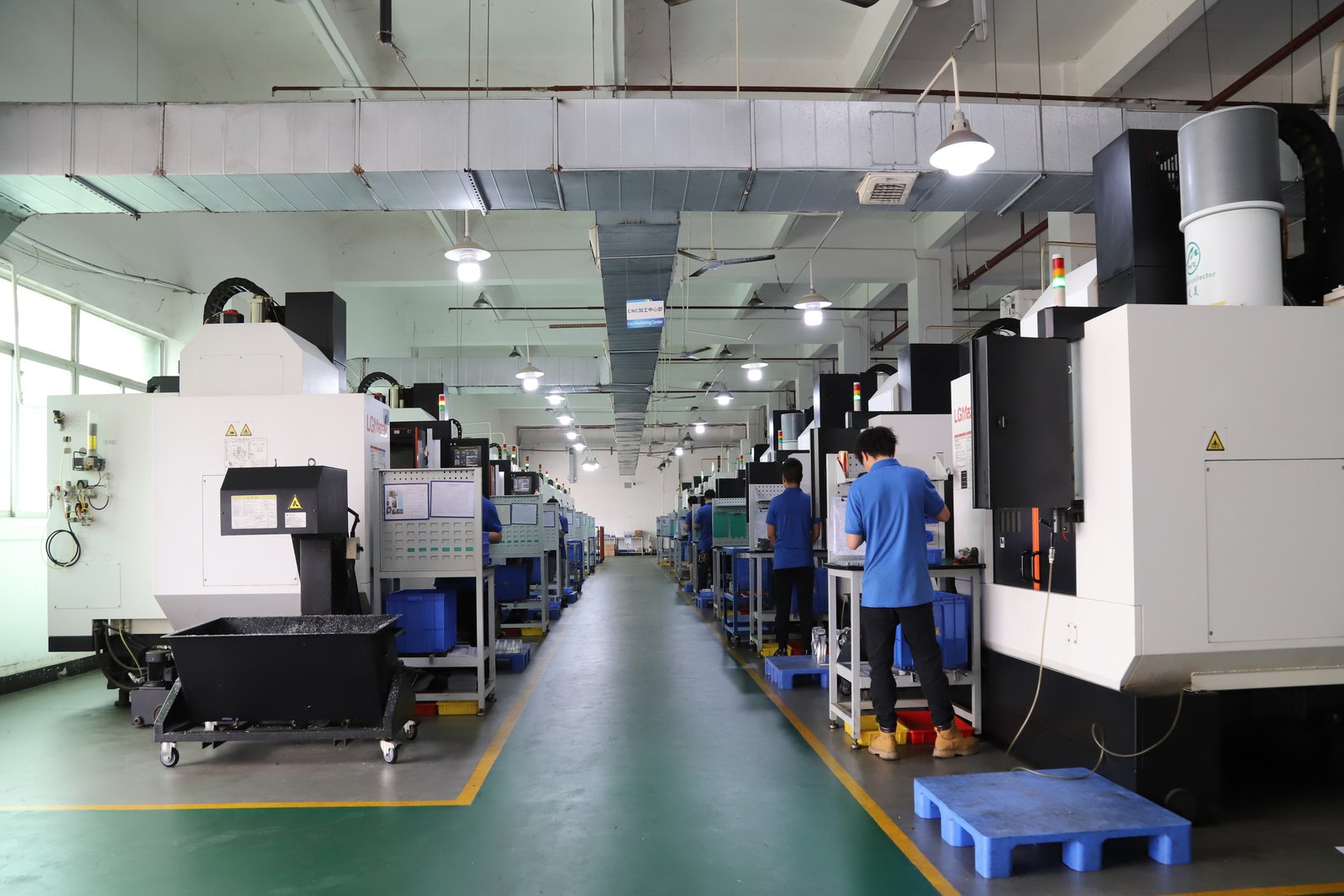
Choose between aluminum and stainless steel the way a materials engineer would — on strength, corrosion resistance, and weight — and you still have not answered the question a milling quote actually prices. When you buy a milled part, the metal line on the RFQ is shorthand for how that metal behaves under a rotating cutter: how its chips form and clear, how fast the tool wears, where the cutting heat goes, how a thin wall holds up, what surface finish the machine can reach, and how stable the dimensions stay from the moment the cutter stops until the part is measured. Those behaviors are the real differentiator between 6061-T6 aluminum and 304 stainless steel on a CNC mill, and they decide your cycle time, your tooling cost, your scrap risk, and the finish your supplier can honestly commit to. This guide is written for the engineer or sourcing lead putting a milled part out for quote. It re-frames the aluminum-versus-stainless decision around machining behavior rather than published material properties, and it ends with a decision table you can carry to the RFQ.
Why does the metal decision belong to the milling floor, not the material spec sheet?
Two separate conversations happen when a part is specified. The first is material selection: which alloy, which temper, which corrosion environment, which load case. That conversation is about the part in service, and on that axis 304 stainless routinely beats 6061 aluminum for strength, toughness, and corrosion resistance, while aluminum wins on weight and thermal and electrical conductivity. The second conversation is machining: what it takes to cut that material into the geometry on your drawing, hold the callouts, and ship it without drama. That conversation decides the price you pay and the risks you carry, and it is the one buyers underweight.
On a milling quote the material behaves as a machining system, not a property table. A machinable metal with modest strength can produce a better, cheaper part than an exotic one that fights every pass. Aluminum alloys are at one end of the spectrum: they cut fast, wear tools slowly, and hold tolerance without special tooling. Austenitic stainless steels sit near the other end: they work-harden under the tool, hold heat at the cut, and punish light cuts and timid finishing passes. None of that shows up in a tensile-strength column, yet it is what makes the same bracket cost one price in 6061 and a multiple of that in 304. When a drawing names only "aluminum" or "stainless steel," the shop is left to guess which behavior profile you mean, and the quote becomes a guess too. That is why the machining-behavior view is not a refinement of the aluminum-versus-stainless debate; it is the version that matters on a milling floor.
What changes first when the cutter meets 6061-T6 instead of 304?
Start with the cut itself, because everything downstream follows from chip formation. Aluminum 6061-T6 is a free-cutting, heat-treatable alloy. At the speeds a modern spindle can deliver, it produces short, light chips that clear a flute easily, and it can run at cutting speeds several times higher than any stainless. The failure mode to manage is the opposite of what most people expect: run 6061 too slow, with too little rake, or with a dull edge, and the aluminum smears and welds to the tool as built-up edge, tearing the surface instead of cutting it. The fix is high spindle speed, a polished-flute or high-helix tool, and enough chip load to cut clean metal rather than burnish it. Get that right and aluminum is one of the most forgiving metals a mill can run.
304 is a different machine entirely. It is austenitic, which means it work-hardens as it deforms, and every cutting pass deforms a thin surface layer before it shears. Leave that hardened skin in place and the next pass arrives at a surface harder than the metal below it. A light finishing cut or a "cleaning" pass that only rubs the skin generates heat and more hardening instead of removing stock, which is why shops tell buyers that timid spring passes on 304 make the problem worse. The rules are the inverse of aluminum's: keep the depth of cut and chip load consistent and generous enough to get under the hardened layer, use positive cutting geometry, flood coolant, and never let the tool dwell. Chips are tougher and stringier than aluminum's, they weld to the cutting edge more readily, and they pack in flutes on deep features. Tool life follows the same story — a carbide edge that lasts through a long run in 6061 wears out far sooner in 304, and the wear shows up as notch wear right at the depth-of-cut line, not as a gradual dulling.
None of this is exotic. It is the ordinary difference between a metal that wants to be cut fast and one that demands the tool stay in the cut. It is also the reason a supplier's first question about your part is rarely "what strength do you need" and almost always "what is the alloy and the temper, and how thin do the walls go."
Why does the same cut run cool in aluminum and hot in stainless?
Machining is a thermal event before it is a geometric one. Nearly all the energy that turns into a chip becomes heat, and the metal decides where that heat goes. 6061-T6 conducts heat roughly ten times better than 304 — about 167 W/m·K against roughly 16 W/m·K for austenitic stainless. The practical result: in aluminum, heat leaves with the chip and spreads through the part quickly, so the cutting edge stays comparatively cool and the workpiece does not build a localized hot zone. In 304, heat is trapped at the tool-work interface because the metal conducts it away slowly. The tool tip runs hot, the workpiece carries a heat zone around the cut, and the edge softens and wears faster than the speed difference alone would predict.
The consequences show up in three places the buyer actually sees. First, tool life: the trapped heat in stainless is what makes per-corner tool cost the dominant machining expense, and it is why coolant strategy — flood, high pressure, or through-spindle — matters more on a stainless job than an aluminum one. Second, the part itself: aluminum may run cool at the cut, but its higher thermal expansion means a warm part measured too early reads oversized; stainless holds a heat zone during cutting but expands less for the same temperature rise. Third, thin features: a wall or rib that is cut while hot and then cools can move enough to matter, in either metal, and the fix is the same — let the part come to the metrology temperature before critical dimensions are verified. The honest summary for a buyer: aluminum is thermally cooperative at the cutter but thermally lively after the cut; stainless is thermally brutal at the cutter but calmer once it reaches a stable temperature.
Thin walls and deep pockets, which metal fights back less on the mill?
Geometry is where the material debate stops being academic, because thin walls and deep pockets are where milling behavior decides whether a part is easy or a saga. Aluminum's elastic modulus is about 69 GPa, roughly a third of 304's near 200 GPa, so an aluminum wall is three times as flexible in bending as the same wall in stainless. At first glance that makes stainless the obvious choice for thin, tall, unsupported features. The milling reality is more interesting: stiffness is only half the equation, and cutting force is the other half. Aluminum is cut with light loads at high speed, so a thin wall can be machined with shallow radial engagement that pushes on it gently, and the wall deflects less than its low modulus suggests. Stainless demands heavier force per chip and traps heat, so a thin stainless wall — stiffer in bending, yes — receives a harder push and a hotter cut, which is the classic recipe for chatter and for work-hardened smearing when the vibration makes the effective cut go light.
Deep pockets and long-reach features repeat the pattern. In aluminum, chips clear, forces stay low, and a modest depth-to-diameter ratio lets the job run at speed. In 304, the same deep pocket concentrates three risks: the long tool deflects under the heavier cut, chips pack and recut in the flute, and notch wear eats the tool at the depth-of-cut line. Shops respond with smaller stepdowns, more tool changes, and more time, which is why a deep, narrow pocket is where a stainless quote starts to look dramatically different from the aluminum version of the same drawing.
The buyer's rule of thumb, then, is not "stainless wins thin walls because it is stiffer." It is: if the part is dominated by tall thin walls or deep narrow pockets, aluminum is the metal that mills more reliably, and stainless will cost you time and tooling to achieve the same geometry. If the wall exists to carry load in service and the drawing truly needs stainless, budget for the machining difficulty rather than expecting the stiffness to make it free.
What surface finish can each metal deliver straight from the mill?
Surface finish is written on milled drawings as Ra, the average roughness in micrometers, and the ladder is the same for both metals: a standard milled face lands near Ra 3.2 µm, a deliberate finishing pass reaches Ra 1.6 µm, and Ra 0.8 µm and below moves into grinding or polishing territory where each step roughly doubles the cost. What differs between aluminum and stainless is how hard it is to climb that ladder from the mill alone, which is a question of cutting behavior, not of the metal's inherent smoothness.
Aluminum, cut at high speed with a polished-flute finisher and a tight stepover, produces a clean sheared surface and can hold the Ra 1.6 µm band as a routine milling result. On open faces it approaches the 0.8 µm region before any grinding step is needed — provided the speed stays high enough to avoid built-up edge, which tears the surface and leaves smeared peaks. Stainless reaches the same numbers only under stricter discipline: the finishing pass must stay deep enough to cut below the work-hardened skin from the previous pass, chip load must stay consistent, and a wiper geometry or a subsequent polish is usually required to match what aluminum achieves in one clean high-speed pass. A timid stainless finishing pass does not just fail to improve the surface; it can leave a burnished, work-hardened skin that looks acceptable to the eye and measures poorly under a profilometer.
Two practical conclusions follow. First, name the Ra only on the faces that need it — a structural face nobody touches at Ra 3.2 is free in either metal, and the cheapest finish improvement is deleting the callout. Second, when you genuinely need a fine finish, understand what each metal requires to get there: for aluminum it is a high-speed finishing pass; for stainless it is grinding or polishing or a carefully managed wiper pass, and the quote should say which one is planned. The detail on the full finish ladder and what each step costs lives in the milling tolerances and surface finishes guide on this site.
Why does a ±0.01 mm callout behave differently in aluminum and stainless?
Take a drawing with a ±0.01 mm callout on a feature 100 mm long, and the metal's coefficient of thermal expansion starts doing arithmetic on your tolerance. Aluminum 6061 expands at roughly 23.6 µm per meter per degree Celsius; 304 expands at roughly 17 µm per meter per degree. On a 100 mm span that is about 2.4 µm per degree for aluminum and 1.7 µm per degree for stainless. A five-degree swing between machining and measurement moves an aluminum feature about 12 µm — more than the entire ±0.01 mm band — while the same swing moves stainless about 8.5 µm. Both metals can hold ±0.01 mm on a disciplined floor; the difference is how much temperature discipline the job demands, and which metal forgives a warm afternoon in the shop.
The discipline shows up as process, not as magic. Critical dimensions are machined and measured against a temperature-controlled reference, parts are allowed to soak to metrology temperature before the CMM reads them, and the drawing's tolerance is interpreted at the standard reference temperature of 20 °C, which is what ISO 1 exists to state. Aluminum is the stricter master here because its higher expansion turns every degree of shop temperature into more microns of uncertainty. Stainless earns its reputation as the easier metal to hold in an uncontrolled environment, not because the machine is more accurate on it, but because temperature moves its dimensions less. On a disciplined floor — ours holds ±0.003 mm on critical milled features as standard production tolerance, with capability tracked at Ppk ≥ 1.67 at the initial study on key characteristics and Cpk ≥ 1.33 on general characteristics. Capability is reported per characteristic: every report names the feature, its tolerance band, the sample size, the sigma method, and the study window. — the practical limit is rarely the metal; it is the temperature loop around the part. For a buyer the question to ask is not "can you hold ±0.01 in aluminum?" but "at what temperature are you machining it, and at what temperature are you measuring it?"
Does quantity decide the metal before the drawing does?
Quantity enters the decision because machining economics scale differently for the two metals. Aluminum's advantage is speed and tool life: the same geometry takes fewer machining minutes and far less tool cost per part, so the per-part price starts low and stays low as the batch grows. Stainless inverts that: each part takes longer, each cutting edge costs more, and the total tool budget is a real line item rather than a rounding error. For a single prototype or a run of tens, the stainless premium is concentrated in a few parts and is easy to absorb, which is exactly when buyers should test the stainless part in stainless, because an aluminum prototype of a stainless part validates the form but not the machining behavior of the production material. A thin-wall stainless prototype cut in aluminum will feel deceptively easy, and the surprises — chatter, work hardening on the finishing pass, tool breakage in deep pockets — will only surface on the first stainless run.
For production volume the arithmetic favors whoever owns the process. If the application genuinely requires stainless — wash-down duty, food contact, medical, chemical — the metal choice is already made, and the machining premium is a design constraint to plan around, not a negotiation. But a surprising share of milled parts can legitimately live in either metal, and there the economic order is clear: aluminum mills cheaper at every quantity because the per-minute and per-edge costs are both lower, and no volume point flips that — stainless only becomes "worth it" through what it buys in service, not through anything it saves at the mill. The quantity question therefore points backward, not forward: before you let volume drive a metal choice, confirm the service requirement that forced the metal. The machining cost will compound the material cost, not offset it.
Do surface treatments move dimensions, and who owns the size budget?
The last piece of the machining-behavior puzzle happens after the cutter stops, and it is where aluminum and stainless diverge again. Aluminum is usually finished with anodizing; stainless is usually passivated, and the two treatments have opposite relationships with part size. Sulfuric anodize — Type II — builds a coating typically 5–25 µm thick, and the oxide grows roughly as much above the original surface as it does below it, so a treated surface gains on the order of 0.005 mm per side, with hardcoat Type III reaching about 0.025 mm per side. On a feature with a ±0.01 mm callout, that coating growth is not cosmetic; it is a dimensional change that must be allocated in the machining plan. Either the critical features are masked before anodizing, or the pre-coat dimension is cut undersize so the coated part lands inside the band, and the drawing must state which convention applies, because a post-coat tolerance measured on an uncoated part is a dispute waiting to happen.
Passivation is the quiet counterpart. The treatment removes free iron from the surface and grows a passive film only nanometers thick, so it changes part dimensions by an amount that does not register on the tolerances a mill can hold. A passivated stainless part arrives at the size the machine cut, with no coating budget to manage and no masking map to maintain. That asymmetry is worth putting on the RFQ: if your critical surfaces are treated, ask who carries the anodize size budget, and write pre-coat or post-coat dimensions explicitly so the shop machines to the right target.
Which metal mills your part more reliably? A decision table for the RFQ
The whole argument compresses into one table. Read down the left column for the machining feature your part depends on; the two middle columns say what each metal does under the cutter; the last column names the metal that mills more reliably for that feature and the cost of choosing the other one.
| Milling feature | 6061-T6 aluminum in the cut | 304 stainless in the cut | Which mills more reliably, and the cost |
|---|---|---|---|
| Thin walls and tall ribs | Low cutting forces and high speeds keep deflection small; low modulus means clamping distorts the part if it is held hard | About three times stiffer, but heavier chip loads push and heat the wall; chatter and work-hardened smearing are the failure modes | Aluminum, milled with light radial passes. Stainless costs slower feeds, more tooling, and chatter risk on the same wall |
| Deep pockets and long-reach features | Chips clear easily, forces stay low, depth-to-diameter ratios are forgiving | Chip packing, tool deflection, and notch wear at the depth-of-cut line compound as depth grows | Aluminum. Stainless pays in stepdowns, tool changes, and cycle time the deeper the pocket goes |
| Fine surface finish (Ra 1.6 µm and below) | A high-speed polished-flute finishing pass reaches the fine band from the mill | The pass must cut under the hardened skin; wiper inserts, grinding, or polishing are usually needed below Ra 1.6 µm | Aluminum for as-milled finish. Stainless costs a defined finishing step — say which one in the quote |
| ±0.01 mm callouts at length | Holds if machining and measurement happen at a controlled 20 °C reference; ~2.4 µm per °C per 100 mm | Lower expansion (~1.7 µm per °C per 100 mm) forgives shop temperature drift | Stainless in an uncontrolled shop; aluminum on a disciplined floor. The cost is temperature control, not the metal |
| Single prototypes and small batches | Fast cycle, cheap tooling, quick iteration in the material of record | Each part absorbs the slow cycle and tool cost; an aluminum stand-in validates form but not machining behavior | Aluminum for cost and speed. Stainless costs a premium per piece — test stainless in stainless |
| Production batches | Machine minutes and per-edge tool cost both stay low at volume | Longer minutes and a real tooling line item that scale with the batch | Aluminum at every quantity on machining cost. Stainless is justified by service requirements, not by the mill |
| Surface treatment on critical features | Anodize grows ~0.005 mm per side (Type II, up to ~0.025 mm hardcoat) — pre-coat machining must allocate the coating | Passivation adds no measurable size — the part ships at as-machined dimensions | Stainless for size budget simplicity. Aluminum costs a masking map and a stated pre-coat or post-coat convention |
Read the table one more time and the pattern is unmistakable: aluminum is the metal that mills more reliably wherever the machining is about speed, chip control, geometry access, or finish, and stainless is the metal that mills more reliably wherever the risk lives in temperature and dimensional stability. That is the honest shape of the decision. Neither metal wins the part; the machining features on your drawing pick the winner, and the cost column tells you what the losing metal would have charged you in time, tooling, or temperature discipline.
Five questions to answer before you quote either metal
Bring the decision table to the RFQ by answering five questions in the drawing package or the inquiry email. Each one closes a loophole a vague inquiry leaves open.
1. What material state is on the drawing? "Aluminum" and "stainless steel" are not specifications. Name the alloy and temper — 6061-T6 for general milled work, T651 plate where stress relief and flatness matter, 7075-T6 where the service load demands it — and name the stainless grade and form, typically 304 or 316 in annealed bar, or 303 where free machining matters more than corrosion margin. The material state sets the machining behavior the shop will plan around, and a drawing that leaves it open invites a quote that guesses.
2. What is the thinnest wall on the part? Wall thickness and wall height are the geometry facts that decide whether the job is easy in either metal. State the minimum wall thickness on the drawing and let the shop tell you which metal will cut it reliably and how — a tall thin wall in aluminum wants light high-speed passes, the same wall in stainless wants a rigid setup and a real tooling plan. If the drawing cannot answer its own wall question, the gap is a design problem worth solving before any metal is ordered.
3. Which surface treatment, and who carries the size budget? Decide anodize versus passivation before quoting — the two treatments have opposite effects on part size. If aluminum is anodized, state whether critical dimensions are pre-coat or post-coat and confirm the coating thickness class; if stainless is passivated, the size budget disappears and the part ships as machined. Put the treatment callout on the drawing so the machining target is unambiguous.
4. Does the quote make sense when you compare the two metals? Use quote symmetry as a verification tool. Because aluminum is faster to cut and easier on tools, an aluminum quote should carry lower machining cost than stainless for the same part, and a stainless quote that comes back close to aluminum pricing deserves scrutiny, because it may mean the job is quoted on assumptions that will not survive the first run, or routed to a trading desk rather than a milling floor. Conversely, an aluminum quote that looks high on a thin-walled part is usually honest: thin walls cost machining minutes even in a fast metal. Ask for the machine-time and setup breakdown; the ratio between the two metal quotes should reflect the material behavior the table above describes.
5. At what temperature will it be machined and measured? A ±0.01 mm callout at length is a temperature claim before it is a machining claim. Ask whether critical dimensions are measured at the standard 20 °C reference and whether the part is allowed to reach metrology temperature before the CMM reads it. The answer separates a floor that holds tolerance by process from one that holds it by luck — in either metal.
The decision, in one paragraph: start in aluminum when your part lives or dies on how it is machined — thin walls, deep pockets, fine as-milled finish, prototypes, and anything where speed and tool cost dominate — and reach for stainless when the part lives or dies on what happens after machining: a corrosive or wash-down environment, a service load that aluminum cannot carry, or a dimensional budget that must survive a shop without tight temperature control. When both are plausible, quote both from the same drawing and compare the machining assumptions behind the two numbers, because that comparison tells you more about the supplier than either price does alone. The CNC milling buyer's decision sequence walks the same ground from the drawing side, and the aluminum milling guide covers the alloy, temper, and geometry detail for the metal that will win most of these RFQs.
Frequently Asked Questions
When is stainless actually the stronger choice for a milled part?
Yes on strength and toughness — 304 offers meaningfully higher yield and tensile strength than 6061-T6 — but strength rarely decides which metal mills better. For a milled part the practical differences are machining behavior: aluminum cuts fast with light loads and long tool life, while stainless work-hardens, holds heat, and costs more per part. Choose the metal for what the part must do in service; budget for what the metal does to the machining process.
Does 304 stainless really work-harden during milling?
Yes. Austenitic stainless hardens where it deforms, so each cutting pass leaves a hardened surface layer. If the next pass cuts lighter than that layer, the edge rubs instead of cutting, generating heat and more hardening. The machining fix is a consistent depth of cut and chip load that get under the hardened skin, no dwelling, and no timid spring passes, which is why stainless jobs run on different parameters than aluminum.
Why does the stainless version of the same part cost more to mill?
Three compounding reasons: cutting speeds are far lower, so the same geometry takes more machine minutes; each cutting edge wears faster and costs more, so the tooling line item is real; and the heat and work-hardening demand more coolant, more conservative toolpaths, and more tool changes. Aluminum's advantage — speed and tool life — applies at every quantity, so a stainless quote for the same part is structurally higher than the aluminum one.
Does one metal make a tight milled callout easier to hold than the other?
Yes, both metals hold tight tolerances on a disciplined floor — on our milled parts, ±0.003 mm on critical features is standard production tolerance, with precision grinding to ±0.002 mm for sealing and seating surfaces. The difference is temperature sensitivity: aluminum expands more per degree, so ±0.01 mm callouts at length demand a controlled 20 °C machining and measurement reference. Stainless forgives more shop-temperature drift; aluminum demands more discipline.
Does anodizing change the size of an aluminum part?
It does. Type II sulfuric anodize grows a coating of roughly 5–25 µm that builds both above and below the original surface, adding about 0.005 mm per side (up to about 0.025 mm per side for Type III hardcoat). Critical features must be masked or machined undersize to land inside a post-coat tolerance, so the drawing should state pre-coat or post-coat dimensions.
Can I prototype in aluminum and then produce in stainless?
For form, fit, and function checks it works; for machining validation it misleads. An aluminum prototype validates geometry but not how the stainless production part will cut — thin walls that milled cleanly in aluminum may chatter in stainless, and the finishing pass that worked on 6061 may work-harden 304. If machining behavior matters, run the first stainless parts in stainless, even if they cost more per piece.
Which stainless grade mills most like aluminum?
The closest is 303, a free-machining austenitic grade with sulfur added to break chips and reduce welding to the tool. It trades some corrosion resistance for machinability and is the pragmatic choice when a stainless part is machining-heavy. Where corrosion performance is the priority, 304 or 316 remain the standards and the slower, more careful machining is simply part of the cost of the material.
Send the drawing with the wall thickness and the surface-treatment callout marked, and we will flag which metal cuts it more reliably.
You will get back a machining quote with the aluminum and stainless options priced side by side. Email [email protected] or call +86 13126536955.