
How Much Does CNC Milling Cost in 2026? A Buyer's Cost Model
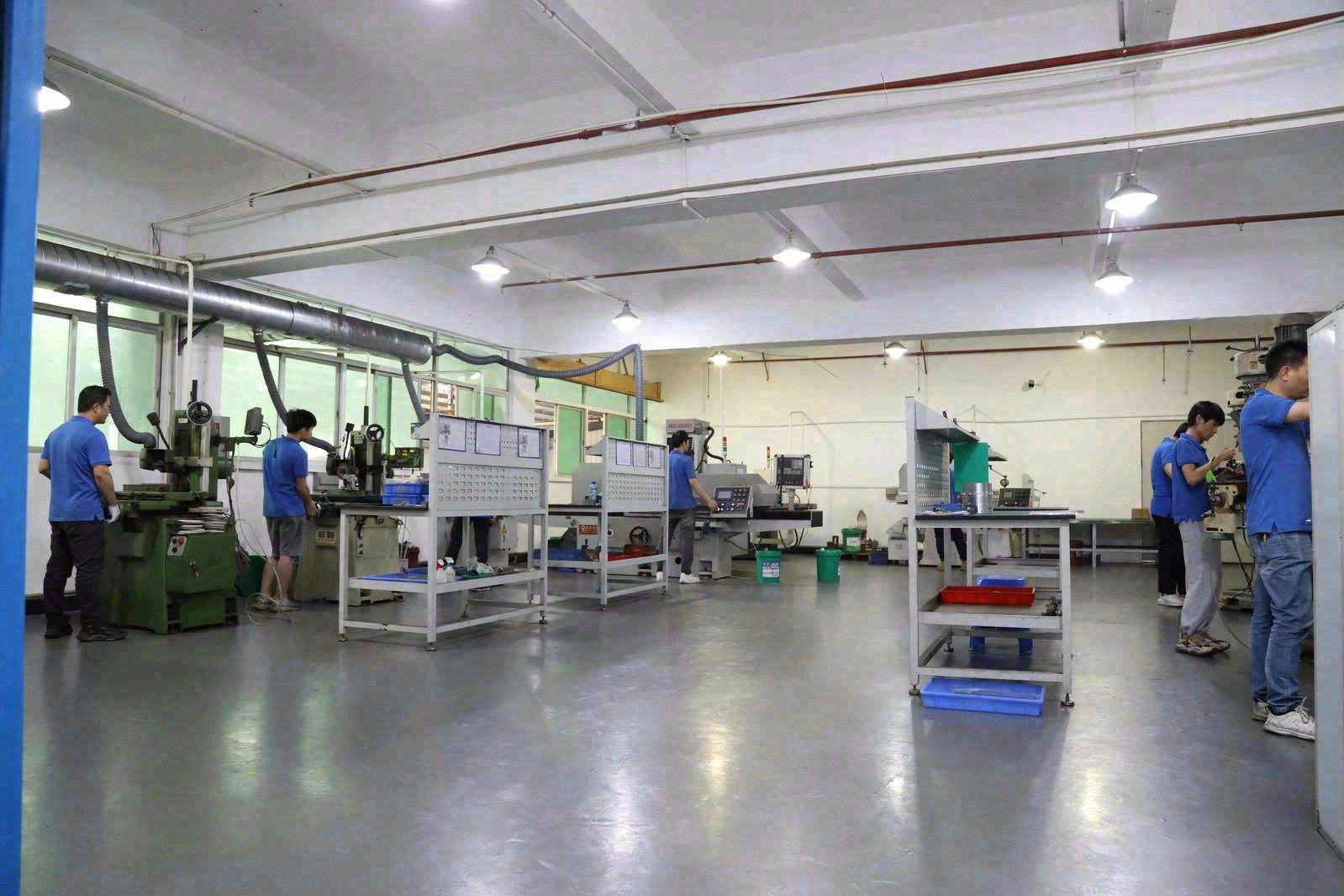
Ask ten milling shops what a part costs and nine will answer with a question: "May I see the model?" That exchange is not a stall — it is the pricing logic of the process itself. A milled part is priced by the toolpath: every pass of the cutter, every setup between them, every minute the spindle turns. Change the geometry and the toolpath changes; change the toolpath and the price changes. What a buyer needs is not a single number but a cost model — a way to read the shape of a milling quote, to see which feature is eating the money, and to compare shops on the same basis. This guide builds that model for milled parts and shows how to interrogate any quote with it.
Why does every serious milling quote start with a 3D model?
A milling machine does not price metal by the kilogram, the way a foundry can price a casting. It prices work: the minutes a cutter spends roughing stock away, finishing a face, opening a pocket, drilling a hole, chasing a thread. All of that is decided by geometry, so a shop quoting without geometry is pricing a guess. That is why the fastest route to a realistic number is a complete file — a 3D model in STEP or IGES for the machine to read, a PDF drawing naming material, tolerances, and finish, and the quantity you plan to order.
Online rate tables — "$50 an hour for a 3-axis mill, $120 for a 5-axis" — are useful in exactly one way: they confirm that the price is made of time and setup, not of material alone. A rate only becomes a part price when you multiply it by the minutes a specific geometry spends on the spindle, and divide the fixed cost of programming and fixturing across the batch. Without the model, both of those terms are guesses. With the model, the toolpath is real and the price can be real too.
What does the machine rate actually pay for?
When a shop quotes a milling rate, it is not just billing for the hour. The rate carries the machine itself — its purchase price, maintenance, and floor space — plus the tooling that wears on your part, the operator who runs the setup, the inspection that verifies the features, and the quality system behind all of it. A 5-axis machine bills more per hour than a 3-axis machine for a reason: more axes, more complexity, more capability, more capital tied up in the spindle.
The trap is treating the rate as the price. A fast machine at a high rate can still produce the cheapest total for a complex part, because it finishes in one clamping what a cheaper machine needs three setups to do. And a slow machine at a low rate can turn a simple part into an expensive one when it spends an extra hour fighting geometry it is not built for. The unit that matters is not dollars per hour; it is dollars per part at your quantity. Everything below is about estimating that number before the quote arrives.
Where do the machining minutes go in a milled part?
Every minute on a milling machine belongs to one of four blocks, and a cost model is mostly a toolpath model — an estimate of how long each block takes:
- Roughing. Removing the bulk of the waste stock as fast as the material allows. Roughing time is set by how much metal has to come off and how aggressively the material accepts a cutter. Aluminum roughs quickly; stainless and titanium cut slower and punish over-aggressive feeds.
- Finishing. The passes that bring surfaces to size and to the specified roughness. A tighter surface finish means more finishing passes; a tolerance like ±0.003 mm means slower feeds and a separate finishing strategy on that feature.
- Feature work. Holes, pockets, slots, threads, and contours — each is its own operation with its own tool. Deep holes need peck cycles, small holes need small cutters running at high spindle speed but low material removal, and threads take either a tap or a thread-mill pass. Feature count drives time far more than part size does.
- Tool changes and moves. Between every operation the spindle stops, the tool changes, and the cutter moves to its next start point. A part that needs a dozen different tools pays for twelve changes, and every tool change is paid minutes.
Material choice leaks into every block. Aluminum not only costs less as stock; it cuts faster, which shortens the roughing block. Stainless and titanium cost more as stock and then cut slower, inflating every block that follows. That double effect — material price plus machining speed — is why material is the first question a cost model asks.
How do setups and fixtures multiply a milling price?
Before the first chip falls, the part has to be held. A milling setup is the combination of a fixture (vise, soft jaws, vacuum plate, or a dedicated jig), the program that positions the work, and the operator time to prove it. Every time the part is re-clamped to reach another face, the shop pays the setup again, and re-clamping adds alignment risk, because each new position is a chance to introduce error.
This is where axis count enters the cost model. A part with all its features on one face is a 3-axis part: one clamping, one program, the cheapest possible milling economics. A part with features on several faces forces the choice between re-clamping on a 3-axis machine or rotating the work in a single setup on a 4- or 5-axis machine. Fixture design matters just as much on production runs: soft jaws and vacuum plates let a shop load multiple parts per cycle, spreading one setup over several pieces, while a dedicated fixture is worth designing when the run is long enough to amortize it.
Ask a shop which fixture strategy it would use for your part and quantity. The answer tells you whether you are buying one setup per part or one setup per batch, and that difference can matter more than the hourly rate.
When does the axis count decide whether a part is cheap to mill?
The economic heart of milling is the axis question, and the honest rule is simple: use the fewest axes that reach every feature in the fewest clamps. A flat plate with holes and a pocket is a 3-axis part and should be quoted as one. A bracket with features on four faces can be a 3-axis part with four setups, or a 5-axis part with one, and the 5-axis quote can win despite a higher hourly rate, because it removes three setups and three chances for misalignment.
Two warnings keep the axis decision honest:
- A higher axis count does not automatically mean a better quote. If the geometry only needs three axes, a 5-axis machine is wasted capability and the quote will say so. Cheapest is the fewest axes that reach all geometry in one clamping, not the machine with the most impressive nameplate.
- Multi-face work is where the comparison flips. When setups multiply, their cost — operator time, program time, risk of error, and the tolerance stack from re-clamping — can exceed the premium a 5-axis rate charges. At that point the higher rate is the cheaper total. The comparison has to be made per part at your volume, never rate against rate.
When a quote for a complex bracket looks high, ask which axis count it assumes and what a single-setup program would change. A shop that answers with a routing — clamping plan, axis count, operations in order — is showing you where the money goes. A shop that answers with a shrug is quoting a number, not a plan. For the full comparison of when the extra axis earns its rate, the companion guide to 5-axis CNC milling walks through the same trade in more detail.
Which drawing decisions add machining minutes you never intended?
Milling cost is decided at the drawing stage more than at the negotiation stage. These are the features that quietly extend the toolpath, each with a cheaper way to draw it:
- Deep, narrow pockets. A pocket deeper than roughly four times its width needs a small-diameter cutter, which removes metal slowly and deflects under load. Let pockets stay wide and shallow unless the design truly needs depth.
- Sharp internal corners. An internal square corner can only be cut by a tool small enough to reach into it — smaller tool, slower cut, more breakage. Specify the largest internal radius the design tolerates, and keep a single radius on all internal corners, so one tool does the whole job.
- Unsupported thin walls and large floors. A tall thin wall or a wide unsupported floor vibrates under the cutter, forcing slow feeds and light passes. Stiffen the section or accept the slow cut — the drawing decides which.
- Deep holes and fine threads. Deep holes run peck cycles that spend most of their time retracting; small threads demand the smallest, most fragile tools in the cabinet. Standard depths, standard thread sizes, and standard hole sizes keep standard tools on the job.
- Tolerances and finishes on every surface. Each tight tolerance and each fine roughness adds finishing passes and inspection on that surface. Call out the functional characteristics only; let everything else ride the drawing's general tolerance.
- Nonstandard stock sizes. Milling starts from bar, plate, or billet, and the machine cuts away whatever does not belong to the part. If the design forces an oversized or odd-dimension stock purchase, the waste metal is paid for twice — once as stock, once as machining time removing it.
The most expensive habit in milling is over-specifying a detail that carries no function. A corner radius that saves one tool change, a tolerance that saves one finishing pass, a standard thread that saves one special tool — each is small, and together they decide whether a part is quick to quote or painful to produce.
What does the fixed-versus-variable split in a milling quote reveal?
Every milling quote hides a two-part structure: a fixed block — programming, fixtures, first article, tooling set-up — paid once per order, and a variable block — material, machining minutes, finishing, inspection — paid per piece. You can pull those two numbers apart by asking for the unit price at two very different quantities, and the arithmetic is simple.
Suppose a shop quotes the same milled part at $380 each for 5 pieces and $58 each for 500. Solve the two equations and the fixed block is roughly $1,630, with variable cost near $55 per piece. Those figures are illustrative — substitute your own quote's numbers — but the readout is the point. At 5 pieces, each unit carries more than $300 of setup and programming overhead. At 500 pieces, the fixed share has fallen below $4 and the price is nearly all material, minutes, and finishing.
That split tells you which lever to pull. If the price collapses with volume, the job is setup-bound: removing a setup from the routing, or committing to a volume that spreads the fixed block, saves more than any rate negotiation. If the price barely moves with volume, the job is time-and-material-bound, and the lever is design — lighter machining, cheaper stock, or a shorter toolpath. Read the curve before you negotiate, and you negotiate the cost structure instead of the margin.
What should a 2026 cost model include after the machining quote?
The price on a milling quote is not the price on your dock, and a cost model that stops at the machine rate is missing half the decision. Four items belong in the model alongside the part price:
- Surface finishing and secondary operations. Anodizing, plating, passivation, heat treatment, and bead blasting each run on their own schedule and price. Anodizing grows the surface — roughly half the oxide thickness builds into the part — which is why a bore machined to size can bind after anodizing unless the drawing accounts for the growth. Line items for finishing belong on the quote, not discoveries on the invoice.
- Inspection and documentation. Dimensional reports on a coordinate measuring machine, XRF material verification against the mill certificate, first-article records — all are labor and equipment time. Ask which inspection is included and which is quoted separately; the answer separates a controlled shop from a sorting shop.
- Freight, duty, and the Incoterm basis. An EXW price and a DDP price can describe the same part at numbers that differ by more than the freight itself. Name the Incoterm you need when you request the quote, so every supplier prices the same delivery scope, and add duty, customs handling, and payment costs on your side of the ledger. The factory in this case sits in Dongguan in the Pearl River Delta, close to Hong Kong and Shenzhen ports, which keeps the shipping leg short and predictable.
- Quality cost across the run. The cheapest quote is the expensive one when parts fail incoming inspection. A shop that documents process capability — Cpk at 1.67 or higher on key characteristics — prices quality into the part instead of into your rejection rate. That difference belongs in the per-part cost, not in a footnote.
Compare every supplier on the same basis: same Incoterm, same included inspection, same finishing scope, same target volume. The number that decides is the landed, inspected, accepted cost per part, and that is the number a real cost model produces.
Which five questions separate a milling price from a milling understanding?
A quote is only as useful as the questions behind it. These five turn a milling price into an understanding:
- "Which feature drives the longest toolpath?" A shop that names a specific pocket, wall, or corner understands your part. A shop that cannot answer is quoting a number, not a routing.
- "What is the unit price at 5 pieces and at 500, and where does the curve step?" This gives you the fixed-versus-variable split above and exposes an internally inconsistent quote.
- "Which axis count is this priced on, and what would one setup fewer change?" The axis decision is where milling cost is won or lost, and a shop should be able to show its clamping plan.
- "Which Incoterm is this on, and what is included?" Get delivery scope, packaging, inspection reports, and material verification onto the table before you compare.
- "What would a small drawing change save?" A serious shop gives a design-for-cost read on its own quote — a corner radius, a tolerance, a stock size — which is the difference between a supplier and a price-taker.
Ask these five, run the two-quantity arithmetic, price every shop on the same Incoterm, and the model does the rest. The guide to CNC milling for buyers covers the specification and quality side of the same decision; this model covers the money.
Frequently Asked Questions
How much does CNC milling cost, roughly?
There is no honest flat rate — a milled part is priced by toolpath minutes, setups, and quantity, so the same geometry can be cheap at volume and expensive as a one-off. The fastest route to a real number is a complete file: send the 3D model, the toleranced drawing, the material, the finish, and the quantity, and the quote will show the cost blocks instead of a guess.
Why does the same milled part cost less per piece as quantity climbs?
Because programming, fixturing, and first-article work are paid once per order. Spread those across one piece and each unit carries the whole load; spread them across hundreds and the fixed share nearly disappears. The MOQ here is one piece, so a prototype and a production run can share the same file — just expect the one-off to carry its genuine setup cost.
How much more does a 5-axis quote cost than a 3-axis quote?
Rate-wise, a 5-axis machine bills more per hour, but the comparison that matters is total per part at your quantity. Simple one-face parts are cheapest on 3-axis; complex multi-face parts can be cheaper on 5-axis because one clamping replaces several re-clamps. Use the fewest axes that reach every feature in the fewest clamps.
Do finishing and anodizing cost extra?
Yes, and they should be line items, not surprises. Each finishing step — anodizing, plating, passivation, bead blasting — carries its own batch economics, and anodizing grows the surface roughly half inward, which a drawing must allow for on fits. Ask which finishing is in the quoted price and which is quoted separately.
Is CNC milling in China cheaper once shipping is included?
Usually, for the right parts, but only a landed-cost comparison proves it for yours. Price every shop on the same Incoterm, add freight, duty, and payment costs, and compare delivered cost per part at your target volume. A Dongguan factory in the Pearl River Delta sits close to Hong Kong and Shenzhen ports, keeping the shipping leg short.
How do I get an accurate price for my milled part quickly?
Send the complete package in one message: the 3D model, the PDF drawing with material and critical tolerances called out, the quantity, finishing requirements, and your target Incoterm. The first response target is within 30 minutes during business hours, and a clearly defined part can move to a quote the same day.
Want the milling cost breakdown behind your quote?
Send the model and target quantity to [email protected] or call +86 13126536955. You will get a quote split into machining, setup, material, finishing, and inspection — the line items this model reads.